
千金女佣
美最新研究:新冠病毒使至少50万人脱离美国劳动力市场_疫情_戈皮_我的网站

一 |
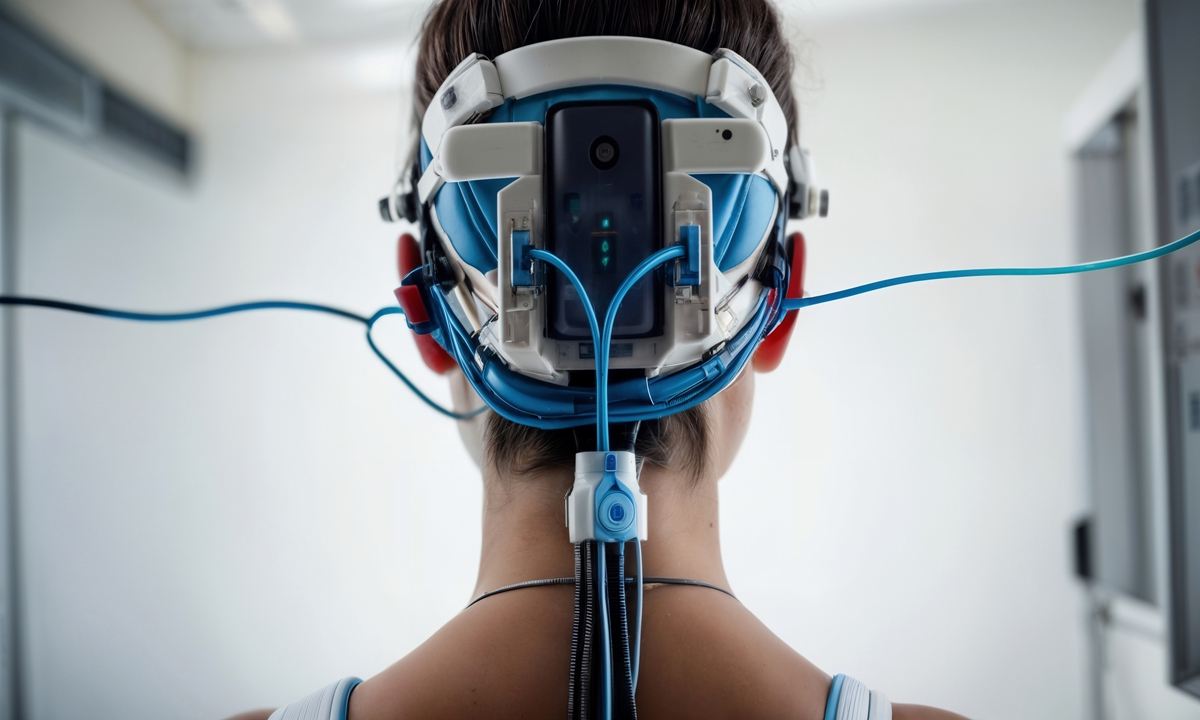
Chinese researchers have developed a multifunctional electrode coating that addresses key challenges in long-term brain-computer interface (BCI) implantation, including signal loss and tissue adhesion, bringing BCI one step closer to clinical application, the Global Times learned from the research team behind the findings on Sunday.
As an emerging field combining neuroscience and artificial intelligence (AI), BCI faces a major challenge of ensuring long-term compatibility between electrodes and brain tissue. Previous clinical trials showed that immune responses could cause implanted electrodes to retract after just three months, severely reducing signal quality and the number of available channels.
This problem stems from chronic inflammation triggered by implants, which creates insulating scar tissue around electrodes and separates them from neurons. Irreversible adhesion between electrodes and brain tissue after long-term implantation also makes device removal risky, potentially causing brain injury during follow-up surgeries.
Experiments showed that flexible neural electrodes coated with this material could operate stably in the brain for more than 300 days and could be safely removed without causing damage. This means the universal coating technology can make electrodes not only operate stably over the long term but can also be safely removed and replaced after aging, paving the way for long-term BCI applications.
Developed by the research team led by Zhang Wei at the Technical Institute of Physics and Chemistry, Chinese Academy of Sciences, associated with Beijing Tiantan Hospital, Shanghai Institute of Microsystem and Information Technology and NeuroXess, a high-tech life science company specializing in BCI technologies, the cationic alternating peptide electrode coating preserves electrode flexibility and conductivity, while offering antibacterial, anti-protein adsorption and immune-rejection-inhibiting functions.
A 300-day animal study showed the coating's effectiveness. Bare electrodes experienced a sharp loss of recording capability after 90 days of implantation and could barely detect neuronal signals after 300 days. In contrast, coated electrodes maintained stable recording channels and consistently captured neural signals above 155 microvolts.
In terms of neural modulation, after 300 days of implantation, conventional electrodes required a current of 100 microamps to induce weak limb responses, while coated electrodes triggered clear movements with only 2 microamps, improving modulation efficiency by 50 times.
Notably, the removal tests highlighted a key advantage of the coating that electrodes no longer form irreversible bonds with brain tissue. In the experiments, the coated electrodes were removed intact, with minimal damage to the surrounding brain tissue, Zhang told the Global Times on Sunday.
。
原标题:美最新研究:新冠病毒使至少50万人脱离美国劳动力市场根据《华尔街日报》当地时间9月12日报道,最新研究发现,由新冠病毒引起的疾病已使美国劳动力减少了约50万人,如果继续保持目前的病毒感染率,美国劳动力将会持续被削减。根据研究,在新冠疫情期间,数百万人因各种原因离开了劳动力市场,包括退休、缺乏儿童保育和对新冠疫情的恐惧等。8月份劳动力总规模达到1.647亿人,首次超过2020年2月疫情前水平。但该研究作者、斯坦福经济学家戈皮·沙·戈达以及麻省理工学院经济学家埃文·J·索尔塔斯表示,如果没有疫情影响,劳动力总人数预计将增加50万人。若美国持续保持当下新冠感染水平,预计将损失更多劳动力。部分经济学家认为,美国劳动力的缓慢复苏以及对工人的高需求是美国经济面临的主要挑战之一,这限制了雇主提供商品和服务的能力,并加剧了价格压力。专家称,解决这种不平衡对于降低高通胀至关重要。(总台记者 张颖哲)返回搜狐,查看更多责任编辑:
。Current article:http://3s9o3i.gamajionghuanmuniuzhuanguchu.cyou/list_tn3itz/vit.html
Published on:20:39:54
- 上一篇:报道:美国敦促韩国投资建设存储芯片工厂
- 下一篇:今晨新西兰北岛连发地震 多地有震感
我的网站最近更新
- 新加坡DP家属准证介绍
- 日媒试玩《昭和米国物语》:爽!又有点不太对劲
- "사제폭탄 설치" 협박받은 청주지법, 수색 결과 폭발물 미발견
- 网传河北一地“白菜装车前蘸甲醛” 当地通报:属实 紧急追溯流向
- 机器人100米预赛小组垫底,宇树科技回应:精力主要在量产产品上,没能顾全赛事准备
- A股周五延续涨势 贵金属板块走强,A股周五延续涨势 贵金属板块走强
- 南海争端或“大结局”,200名菲人员涌向黄岩岛
- 中国国家卫健委:警惕打着“宗教医学”幌子非法行医等行为
- 我国帆船好手墨士廉卢军汉 星期二返回新加坡
- 2.91亿!芯片界的“乐高”拿下早期融资,创始人曾任Alphawave总经理
- 中国文旅产业具有强大韧性与活力 多项利好政策助力全球旅游市场发展
- '선관위특검' 이태한 "특검보 후보 10명 선정…임명 즉시 수사 착수"
- 【期股联动】低硫燃油主力暴跌超8%!美伊停火曙光重挫国际油价逾4%
- 工信部:未来五年加快打造航空航天、智能机器人等新兴支柱产业
- 套餐新组合,好运“双”重奏!——双色球套餐票赠票活动燃情开启!
- 下周关注:英伟达等将披露财报 这些投资机会最靠谱
- 放话防到找不着北!小卡1V1百分大战对手锁定白晶:别想在我头上拿超10分
- अगर आप भी लेते हैं गूगल मैप का सहारा तो हो जाएं सावधान! 4 जिंदगियां हो गईं लापता, जानिए कैसे
- 美国国际贸易委员会对硬木和装饰胶合板作出双反产业损害终裁
- 加州又起大火:事发全球最大储能电厂,有数万块电池,马斯克急辟谣
- 中日韩运动会激战正酣 U18女篮豪取两连胜
- 济南这家“共享厨房”为异地求医人撑起一处暖心港湾
- 泡泡玛特业绩出炉 段永平发声
- 资金与用地为何双双“投票”钱塘?
我的网站热门资讯
- 脱衣俱乐部?裸体小镇?《GTA6》遭黑客泄露内容越来越离谱!
- 铠侠发布写不死的数据中心TLC SSD 最高容量7.7TB
- 前保安杀进了AI决赛,高中生拿走25万!这AI比赛办得有点绝
- 第十届海峡两岸艺术名家邀请展在台北开展
- साइकिल चलाकर विधानसभा सत्र पहुंचे कैबिनेट मंत्री श्याम सिंह राणा, युवाओं को दिया खास संदेश
- 请立即更新至26.02版本:7-Zip被曝高危漏洞,可远程执行任意代码
- “高抛低吸”,国米重新迎回卢卡库
- 법무부, '단속 제외 거래' 유착 의혹 광주출입국 직원 수사의뢰
- 免费的新冠检测试剂盒领取期限延长!
- 8月25日中国人民银行开展3860亿元7天期逆回购操作
- 国足踢喀麦隆三大看点不容错过!门将位置出现新面孔,王钰栋爆发
- 河南新乡通报:母子被同学家长殴打 打人者被行拘
- 一城宋韵向世界 河南开封“十五五”深耕打造文旅融合新名片
- 生态环境部、自然资源部等六部门联合印发《生态保护“十五五”规划》
- RakSmart洛杉矶裸机云服务器影响分析
- 海南产经新观察:商业航天加速起势,海南产经新观察:商业航天加速起势
- 田径世锦赛:张德顺女子马拉松名列第11 创个人第二好成绩
- “自动驾驶之王”更新美股IPO招股书 预期下周三登陆纳斯达克
- 北京通州警方近期拘留3名闯站人员
- 桥下空间变身“微运动场”
- पटना मेट्रो और दानापुर-बिहटा एलिवेटेड कॉरिडोर में मंदिरों का पेच, DM ने दिया ये निर्देश
- 市人社局:拼抢争实 促进高质量充分就业
- 钱塘区持续擦亮“银耀钱塘”企退文化品牌
- 299 美元:高通 Arduino VENTUNO Q 边缘 AI 平台开放预购